Struggling to get quality insights from your Clinical Outcomes Assessments and Digital Health Technologies

Meet the team

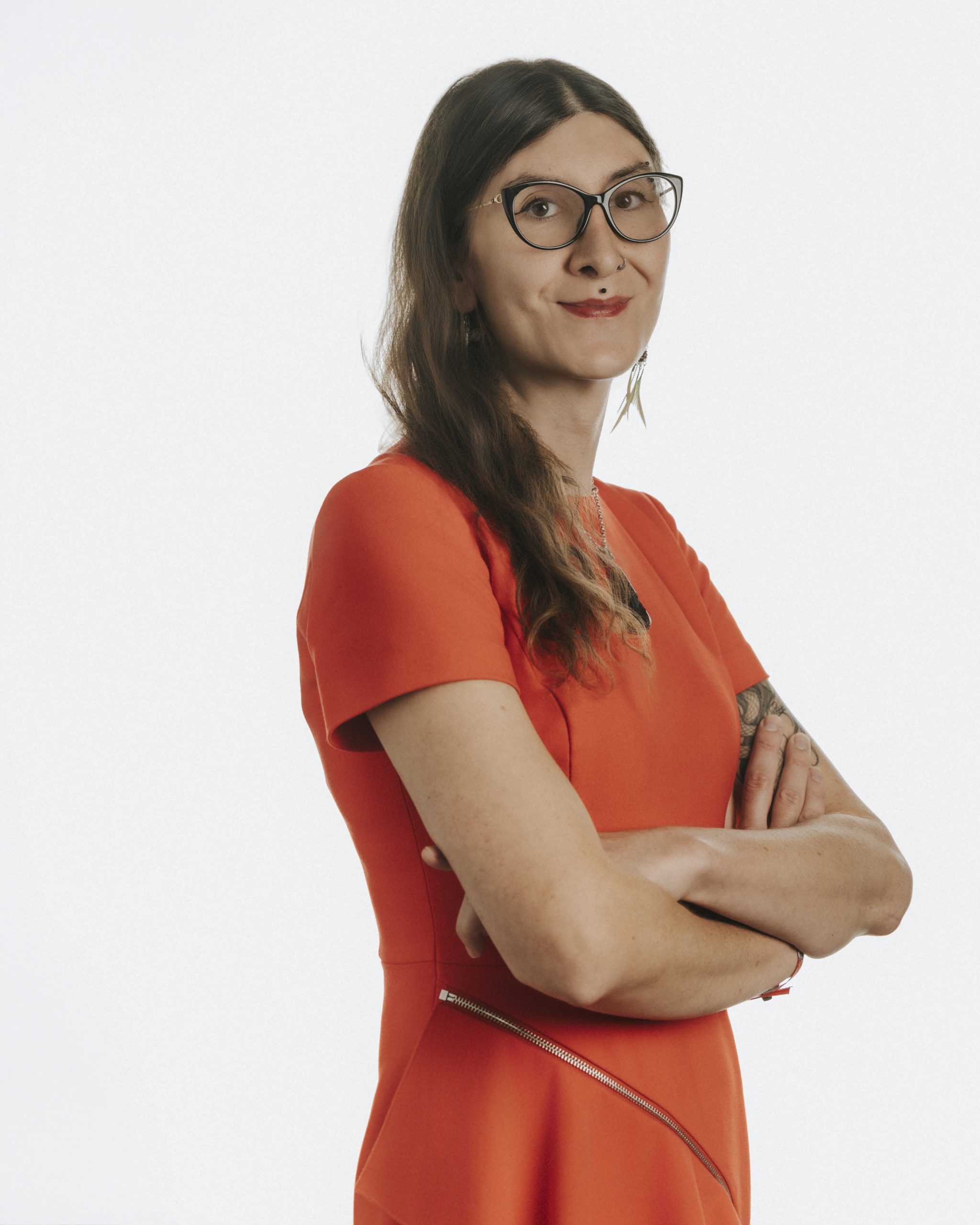
Piper Fromy

Psychometrics and Methodology &
Strategic Consulting

Piper has worked in the clinical outcomes assessments (COA) field for around 10 years, and she has a focus on assessing the measurement properties of instruments included in clinical trials. This ranges from patient reported outcomes and other traditional COAs to the new world of digital health technologies. She is keen to develop intuitive answers to difficult research situations, which includes developing new methods to address the challenges that arise from increasingly complex data and associated questions. Some examples of this are publications for methods of assessing single item reliability or deriving meaningful change thresholds using longitudinal latent models. Further, Piper has been developing methods for meaningful change derivation and intensive longitudinal data analysis, to ensure that data collected from tools such as daily diaries or wearable health technologies are treated correctly.

Across her roles, she specializes in the strategy, development, evidential support, and use of traditional clinical outcomes assessments and digital health technology as applied to clinical trials and clinical practice. She has worked with many pharmaceutical companies and CROs and has built her experience in regulatory interaction and support. From her previous work with the Digital Medicine Society, she also has a deep insight into the digital health technology field and how to position a digital health technology strategy for success.

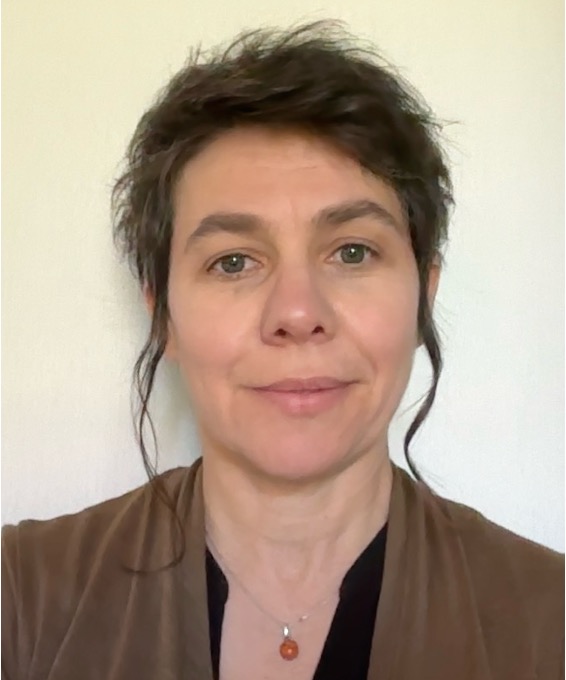
Marie-Jeanne Holveck

Statistics and Programming

Marie has over 20 years of experience as a researcher and educator in biology and ecology, with a strong specialization in statistical analysis and data science. After earning a PhD in Mathematics and Natural Sciences from Leiden University in 2008, she led numerous research projects and taught at university level, while also delivering professional training in technical platforms and software. Over time, her expertise naturally evolved toward applied statistics and data analysis, particularly using the R programming language, which she has mastered since 2006. Her transition to data science was further strengthened through a role as a data science engineer in a consulting firm focused on human resources and the digital transformation of training content.


At Seeing Theta, Marie develops and conducts quality-controlled psychometric and statistical analyses, including analysis plan, programs in R Studio and reports, and has specialized in longitudinal data analyses.


Marie combines her scientific rigor, technical versatility, and pedagogical strengths to support the design and interpretation of statistical studies, often acting as a trusted expert in data analysis for her colleagues. Accustomed to international and interdisciplinary environments, she brings a unique ability to synthesize, structure, and communicate complex information to varied audiences.”

Maryam Bayram

Psychometrics and Methodology

Maryam holds a PhD in Cognitive Psychology and a Master’s degree in Clinical Neuropsychology and Neuroscience from Université Grenoble Alpes. She has experience in experimental design, psychometrics, and quantitative analysis of behavioral and patient-centered data. Her PhD research focused on cognitive and behavioral mechanisms, examining language processing and motor simulation using behavioral measures and non-invasive brain stimulation techniques. Her work has also included literature and scoping reviews.

Following hands-on experience in clinical trials, cognitive testing, scoring and analysis, Maryam transitioned toward a psychometrician role, building on both her academic and applied research background. She is currently completing a university diploma in clinical research.

Maryam brings a strong analytical and methodological mindset to collaborative research settings and is motivated to translate rigorous measurement principles into clear, evidence-based insights for diverse audiences.

Elisa Berger

Statistics and Programming

Elisa has a background in mathematics and computer science, with a strong focus on data analysis throughout her academic training. She has developed solid technical skills in data manipulation, analysis, and interpretation, and is particularly comfortable working with complex datasets across a variety of contexts. She codes in R, has advanced proficiency in Excel, and has experience working with multiple types of databases for different analytical needs.

She has complemented her academic background with specialized training in exploratory factor analysis (EFA), confirmatory factor analysis (CFA), and MIMIC models, strengthening her understanding of statistical modeling and latent variable approaches.

Across her freelancing experiences, she has worked in a range of social sector roles and as a freelancer, collaborating with diverse clients on data-driven projects. Through her freelance work, she has gained experience adapting analytical approaches to different domains, stakeholders, and data infrastructures. Her work reflects a strong ability to bridge technical analysis with practical, real-world questions, ensuring that data is used effectively to inform decision-making.

Kacylia Pistoia

Psychometrics and Methodology

Kacylia is an Associate Psychometrician with a background in Psychology, Cognitive Science and Neuroscience, and has a strong interest in measurement science, data quality, and clinical research. She is joining SeeingTheta in a consulting-focused role, where she supports the development, evaluation, and interpretation of psychometric and digital outcome measures for applied research and health-related projects. Her experience combines experimental methods and physiological measurements, psychometrics and digital tools, with an emphasis on both qualitative and quantitative measurement approaches.

Her experience covers academic and clinical research environments, where she has contributed to projects involving cognitive assessment, patient-reported outcomes, and physiological measurements. As a research coordinator and clinical research assistant, she supported the development, design and coordination of complex research studies, including participant management, data collection and monitoring, database management and quality control with a strong focus on ethics, compliance and regulatory practices.

Kacylia is especially interested in measurement tools (and new digital assessment tools) and how they are designed and used to understand patients’ experiences and outcomes. She focuses on ensuring that data collected from patients are reliable, meaningful, and useful for improving care and well-being. Having studied and worked across France, Switzerland, and Canada, she has a broad perspective and adaptation skills.

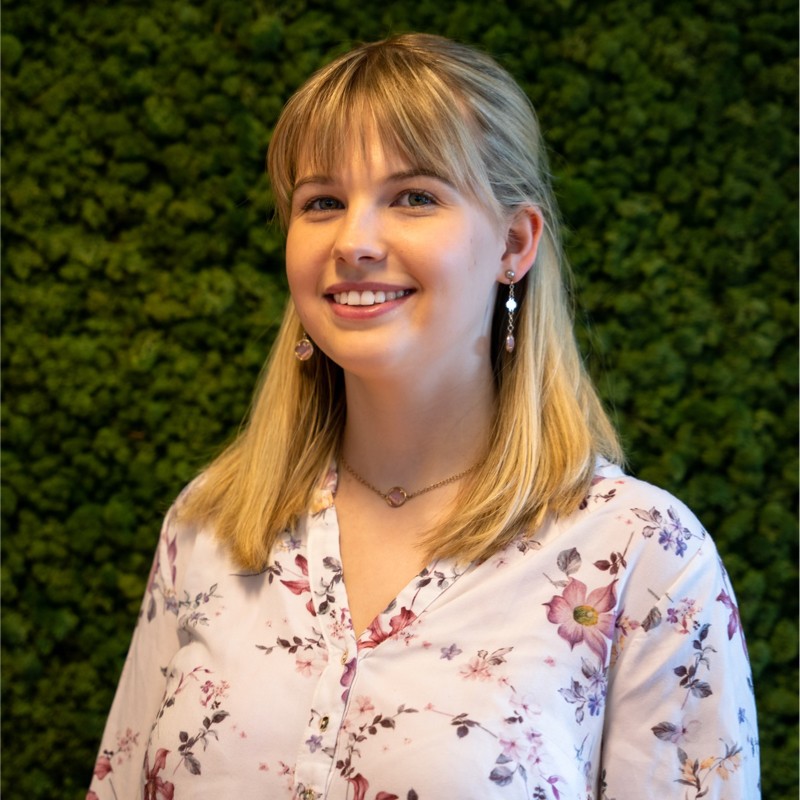
Nikola Markiewicz

Psychometrics and Methodology

Nikola is a Junior Psychometrician/Statistician with a background in psychology and human factors, and a strong interest in measurement science and applied statistical analysis. She holds a Master’s degree in Human Factors & Cognitive Engineering from the University of Twente (Netherlands) with training in psychometrics, experimental design, and quantitative methods.

Her experience spans academic and applied research using survey-based measures, behavioral data, and digital research tools. She supported studies involving eye-tracking and virtual reality, contributing to study setup, data collection, and the deployment of complex measurement systems. She has co-authored a publication on response inhibition in human–computer interaction. Nikola is particularly interested in integrating digital health technologies into traditional research frameworks, ensuring that novel data sources are evaluated and interpreted using robust psychometric principles. Having studied and worked across several European countries, she brings an international perspective.

Services

Seeing Theta works with small biotechs, CROs and large pharma companies to provide clinical outcome assessment services, endpoint strategy research and training in psychometrics and digital health technology. Our tailored approach is rooted in the context of your work and focused on helping you to generate the best evidence for validation.

End point strategy

  • Endpoint development
  • Regularity positioning support

Clinical Outcome Assessment Selection and Development

  • Appraising available measures – GAP analysis/landscape analysis
  • Psychometric analysis support
  • Digital Health Technology selection
  • Evidence for validity in Digital Health Technology

Training

  • Psychometrics
  • Digital Health Technology

Science Copywriting and Proofreading

  • Manuscript
  • Document editing
  • Document proofreading
  • Slide deck design
  • Plain language analysis

LGBTQIA+

  • Sensitivity reading for clinical outcome surveys

What do you need?

We design bespoke solutions focused on helping you reach your goals. Connect with us for a preliminary consultation.

Latest articles
What Difference Does a Day Make?

What Difference Does a Day Make?

Missing data in daily diariesWhy do we sometimes collect data from patients daily, rather than weekly or monthly? One of the main reasons is variability in the patient’s condition. Take the example of asthma. Over a week or a month, an asthma sufferer may experience a...

To discuss how we could work together